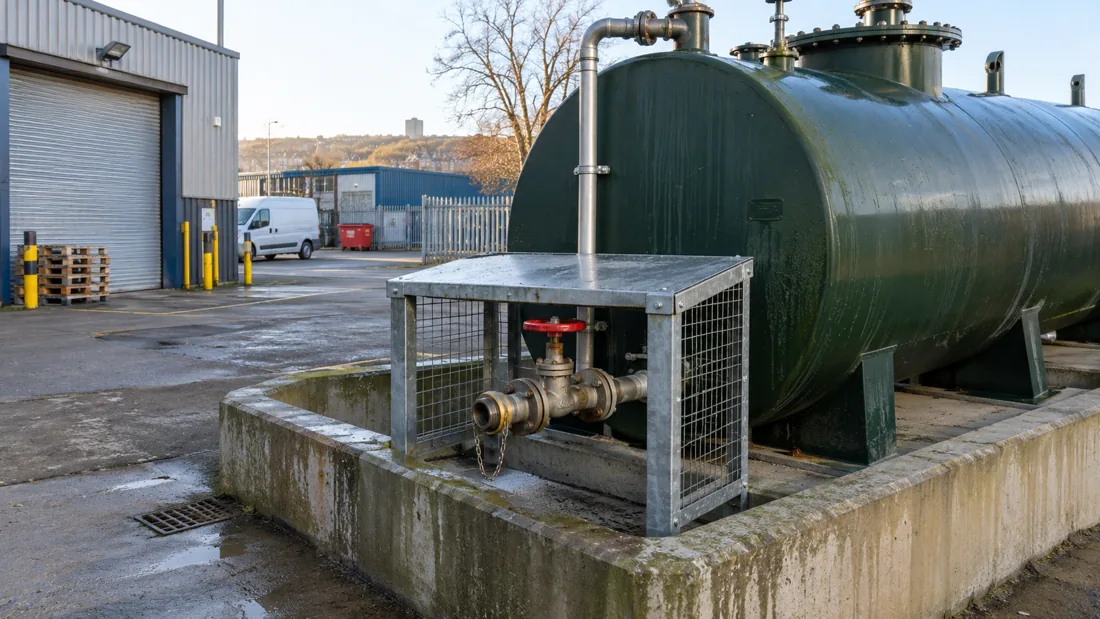
Define What Closing The System Means
Tank decommissioning is the work required to take a storage system out of use in a controlled way. The tank, remaining contents, pipework, fill point and equipment it served need to be considered together. A disconnected vessel can still contain product and present future maintenance or redevelopment problems.
Start by deciding whether the closure is temporary or permanent. A landlord waiting for a new occupier may need a different arrangement from a developer clearing a site for construction. Record that intended outcome in the scope so no one mistakes a temporary isolation for completed permanent closure.
Trace The Installation Before Work
Historic drawings are useful, but the present installation needs checking against them. A remote fill line, a buried connection or a shared fuel return can change the isolation plan. Tell us about previous alterations and any equipment that still relies on the storage.
Include the tank location, capacity and last known product in the enquiry. Unknown contents, unexplained level changes or evidence of leakage should be declared early. If there are several tanks, label each one consistently in photographs and on the site plan.
The programme should name who controls the supported plant, who approves the outage and who owns any remaining infrastructure. Pipework that passes through another tenant's area can need access arrangements beyond the immediate tank enclosure. Lease boundaries should be settled before work is booked.
Contents, Cleaning And Isolation
A permanent closure needs a plan for remaining fuel and residues. Product suitable for reuse can be assessed for transfer, while unsuitable contents and cleaning wastes need an appropriate disposal route. The tank should not be treated as empty solely because the normal suction line no longer draws fuel.
Specialists determine the isolation and preparation method for the proposed end state. Atmospheric hazards, ignition sources and possible entry all influence the work. The HSE DSEAR guidance explains the employer's duties to assess dangerous substances and control the associated fire and explosion risks.
For a tank feeding occupied premises, the operational change comes first. Agree whether another system has already taken over or whether a separate temporary arrangement is needed. Decommissioning should not unexpectedly remove the site's last usable standby supply.
Underground Tanks Need Environmental Planning
A buried tank adds questions about surrounding ground and water. Excavation can reveal a history that is not visible from the access chamber. Suspected contamination needs a planned investigation and a named party responsible for decisions about remediation.
The Environment Agency's underground tank guidance favours removal of equipment unlikely to be reused and sets conditions for permanent retention. An environmental assessment is needed before choosing to leave a tank underground. Discuss the proposed method with the relevant advisers rather than assuming any fill material will be acceptable.
Where retention is justified, tank foam filling may be considered as part of the closure plan. It does not remove contamination outside the tank or replace structural advice about future loads. The location of the retained structure must remain available to future owners and contractors.
Coordinate The End State With Other Trades
A redevelopment programme may separate the tank contractor, demolition contractor and groundworks team. Define the handover between them, including who removes bases, bund walls and buried lines. Clear allocation prevents an abandoned connection being discovered during the next excavation.
If a building is staying occupied, the work boundary and access route need to protect normal activities. List planned deliveries, shared yards and any restricted working hours. A shutdown that is possible at the weekend may still require an authorised building representative to attend.
Ask whether drains, separators and fill cabinets fall within the agreed closure. A fuel storage system is often spread across more of the site than the tank footprint suggests. The finished record should distinguish removed assets from those that remain.
Cost Drivers And Project Information
Decommissioning cost follows the chosen end state, contents quantity, cleaning method and access. Excavation, lifting, filling materials and environmental testing are separate sources of work. Unknown tank dimensions or uncertain contents may require investigation before a firm scope is possible.
Send a marked site plan, exterior photographs, any drawings, the contents estimate and the reason for closure. Explain whether property sale, a new tenant or construction is driving the deadline. Add details of underground services and any previous spill investigation, without disturbing the ground to obtain them.
For comparisons between quotations, ask for the same end state and exclusions. One proposal may close the vessel while another includes line removal and surface reinstatement. The document should say how unexpected contamination or inaccessible infrastructure will be handled.
Keep A Record That Survives The Project
A handover record should identify the asset and describe what was done, including any components left in place. Retain method information, completion photographs and the appropriate waste documents. Atmospheric or gas-free records, where used, relate to the conditions and work for which they were produced.
For a retained underground tank, keep its capacity, previous product, closure method and completion date with the property information. Add an accurate location plan so later contractors can find it. A closure certificate alone is not evidence that the entire site is free from historic contamination.
Tank Decommissioning Questions
Can A Tank Stay In The Ground?
A tank left in the ground needs an assessed permanent closure method and a record of its position and former contents. The decision depends on environmental risk, condition and future site use. Foam filling may be one option, but removal should be considered and any surrounding contamination remains a separate issue.
Is Disconnecting The Fuel Line Enough?
Disconnecting a fuel line does not complete tank decommissioning. Remaining product, sludge, vapour hazards and associated pipework can still need attention. The correct scope depends on temporary or permanent closure, so agree the intended end state before treating the asset as safe for demolition, sale or redevelopment.
Describe Your Site.
Tell us what is there, what remains inside and what you need the finished space or system to do.
Enquire About Tank Decommissioning