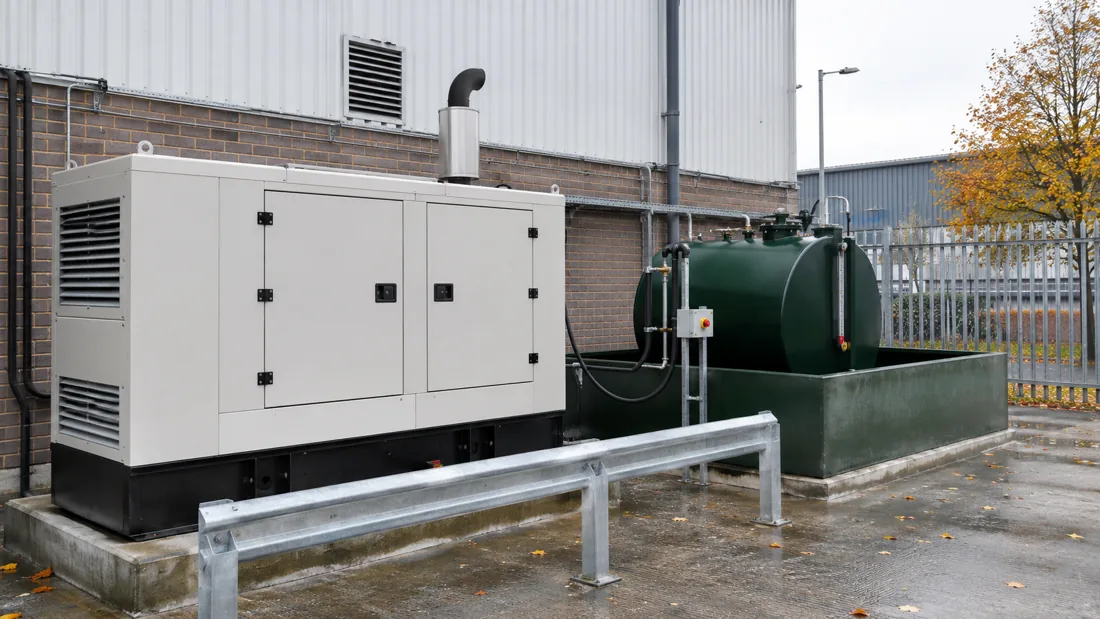
A Generator Is A Connected System
A redundant generator can occupy valuable yard space or obstruct a plant-room refurbishment. Taking away the engine and alternator is only one part of the change. Fuel tanks, control wiring, the exhaust, ventilation arrangements and associated equipment may also remain unless the scope identifies them.
Our enquiry route helps establish the commercial removal requirement before suitable provision is arranged. State whether you want the complete standby installation removed or just a disconnected set collected. An integral base tank and a separate bulk tank need different handling, so include both in the initial description.
Set The Power Boundary First
The building's responsible electrical engineer should identify the supply arrangement and the isolation needed before mechanical handling begins. A generator can have starting batteries and automatic start controls as well as its main connections. Do not attempt disconnection to prepare for a collection.
If the generator remains part of the site's resilience plan, agree its replacement or temporary cover before an outage. Explain which functions it supports and who has authority to accept reduced backup. A quiet generator that rarely runs can still be essential to the building's operating arrangements.
Clarify whether electrical disconnection, controls alterations and testing of the retained installation are included by the appointed provider or another contractor. Keeping that boundary explicit helps avoid a removal team arriving before the set is ready. It also identifies who signs off the building's final electrical condition.
Fuel And Other Fluids Affect Collection
An integral fuel tank should be identified even when the generator is described as empty. A separate day tank or bulk supply may still contain product, water and settled residues. Send an approximate contents level and the fuel type rather than assuming the tank is drained.
Reusable fuel needs an agreed destination and a suitability check. Product that cannot be retained, along with other waste fluids, must be assessed for the correct handling route. The presence of engine oil, coolant and batteries should be included in the removal inventory so these do not become unplanned discoveries.
If the external storage tank is also redundant, link its closure to the generator programme. Our fuel tank removal page explains the separate access and preparation questions for that vessel. Removing the set does not automatically close every fuel line serving it.
Measure The Handling Route
Generator dimensions and weight are important, but the route out can decide the method. A weatherproof enclosure may increase the overall size beyond the equipment dimensions shown on an engine plate. Photograph the whole package, its base and the surrounding working area.
For a roof, basement or internal plant room, describe every change of level and opening on the way to the loading position. Existing lifting points must be assessed rather than assumed usable after years in service. Include overhead services, low doors, floor loading restrictions and any shared access corridor.
Where lifting equipment is needed, HSE's LOLER overview sets out the requirement for a properly planned and supervised operation. The plan must address the actual load and conditions. A crane selection cannot be made safely from a generator power rating alone.
Choose The Final Condition
Decide whether the concrete plinth is staying and what should happen to mounting bolts, exhaust penetrations and weather openings. A removal quotation may stop at taking away the equipment, leaving building repairs to others. Specify weatherproofing and making good if they form part of the required result.
Also identify any equipment being retained, such as a fuel tank that serves a second generator. Clear asset labels and photographs help prevent the wrong component being included. If the generator may be reused elsewhere, tell the provider before dismantling so preservation and transport requirements can be considered.
Collection for reuse, material recovery and disposal are different outcomes. Do not assume an old generator has a resale value or that any value will cover the removal costs. Condition, completeness and the practical cost of extraction all affect the commercial arrangement.
What Drives Generator Removal Cost
Costs depend on the size and weight of the complete set, lifting reach, handling route and the extent of disconnection. Fuel uplift, fluid management, enclosure dismantling and separate tank work can add stages. A single accessible outdoor collection differs substantially from extraction through an occupied building.
Site permits, inductions, security clearance and working outside normal hours also affect planning. Explain whether the loading position can be reserved and how long vehicle access can be restricted. If another contractor must attend for isolation, agree the sequence so equipment and people are not waiting unnecessarily.
A useful quotation separates the removal operation from electrical works and building reinstatement. Ask how delays caused by incomplete isolation or unavailable access will be handled. The agreed programme should identify the point at which the site accepts the loss of the old standby system.
Enquiry Photos And Handover Records
Send the site postcode, manufacturer and model if legible, dimensions, known weight and photographs of any identification plates. Add views of the integral tank, remote fuel supply, connections and the complete route out. Do not remove panels or enter restricted areas just to collect information.
For the handover, agree a record of equipment removed and the destination or disposal route, with waste documentation where applicable. Electrical isolation records belong with the relevant electrical contractor's work. Keep confirmation of retained assets and remaining building works in the same project file, so removal does not leave an unclear maintenance responsibility.
Generator Removal Questions
Can You Remove A Generator With A Base Tank?
Generator removal can include an integral base tank when its contents and preparation are included in the scope. Tell us how much fuel remains and whether a separate bulk tank also feeds the set. The combined weight, dimensions and handling method need assessment before collection or lifting equipment is selected.
Can A Generator Be Removed From An Occupied Building?
Generator removal from an occupied building needs an agreed power boundary, handling route and work window. Describe who controls the electrical isolation and whether standby cover must remain available. Security, noise, temporary access restrictions and making good should be considered before the visit rather than left to the collection day.
Describe Your Site.
Tell us what is there, what remains inside and what you need the finished space or system to do.
Enquire About Generator Removal